01
Step 1 – Pulping Process
The first step in toilet paper production is converting raw materials into usable pulp. Depending on the product, the process may use virgin wood pulp, recycled paper, bamboo fiber, or other alternative materials.
These materials are broken down into individual fibers through mechanical and chemical processes. The fibers are then mixed with water to create a pulp slurry that becomes the foundation of the finished paper.
- Fiber breakdown: materials such as wood, recycled paper, or bamboo are mixed with water and processing chemicals in large pulping tanks or refiners.
- Heating and fiber separation: the mixture is heated, and chemicals break down the raw material into a fine slurry of fibers and water.
- De-inking for recycled materials: if recycled paper is used, the pulp is processed to remove ink, adhesives, and other contaminants.
02
Step 2 – Sheet Formation
Once the pulp is ready, it is spread onto a moving mesh screen to form a continuous sheet.
As the pulp moves along the screen, water drains away, leaving a thin layer of fibers. This layer is pressed and dried to create a smooth, consistent paper web.
- Pulp distribution: the diluted pulp is deposited evenly onto a wire mesh, allowing water to drain and form a wet fiber mat.
- Pressing: the wet mat passes through press rolls that remove additional moisture and help the fibers bond together.
- Drying: heated cylinders remove remaining moisture and turn the fiber mat into a continuous paper web.
03
Step 3 – Rewinding And Converting
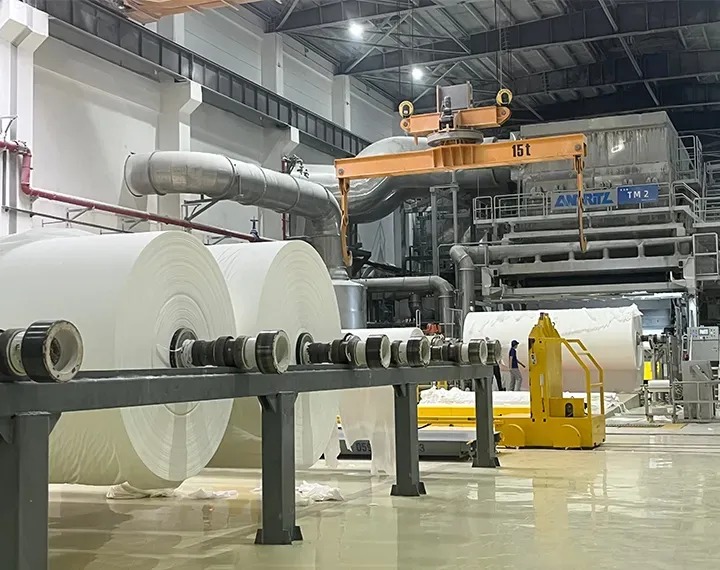
After drying, the paper web is wound into large parent rolls. These rolls are then transferred to converting equipment, where they are processed into toilet paper rolls.
- Embossing: the paper passes through embossing rollers that add texture, improve softness, enhance appearance, and help bond the plies together.
- Perforating: the paper is perforated at precise intervals so each sheet can be torn from the roll easily.
- Plies formation: for multi-ply products, two or more layers of paper are combined to improve strength, softness, and absorbency.
04
Step 4 – Cutting And Packaging
The final stage turns large parent rolls into finished toilet paper products.
- Slitting and cutting: the paper is cut into rolls of various widths and diameters according to product specifications.
- Packaging: each roll is wrapped in plastic or paper packaging to protect the paper and improve presentation.
- Bundling: finished rolls are grouped into retail packs, which may include brand labels, printing, or eco-friendly packaging materials.